Claude Models Explained: Haiku, Sonnet, Opus, and Fable as Tools in a Workshop
12 Nov 2026 · Super Intelligence · by Ikbal Mulyadi
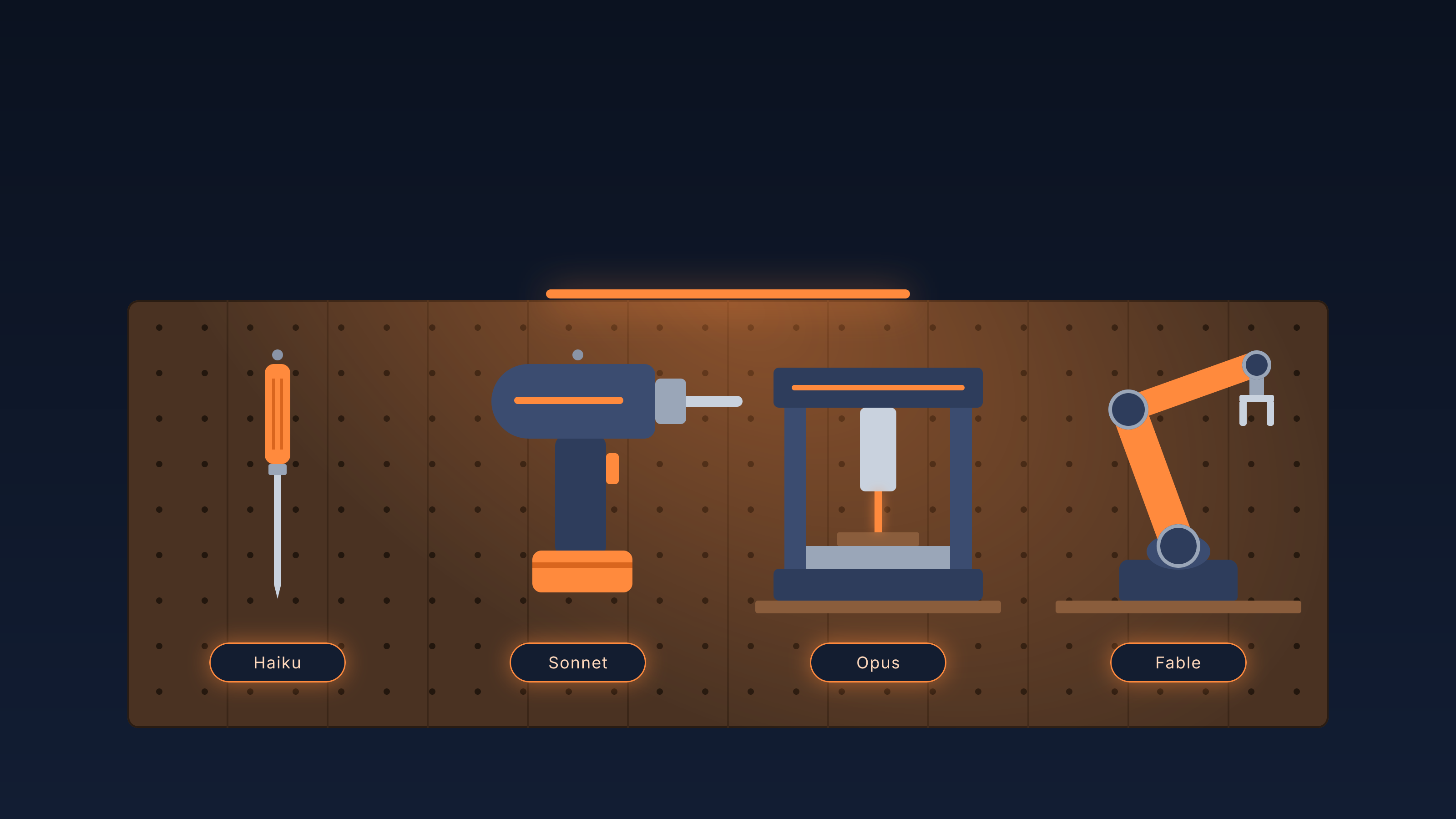
Many people ask me which Claude model to use. My answer is always the same: use the right tool for the task.
A workshop is a good way to think about this. A good worker does not use one tool for every job. The worker picks the tool that fits the work.
The Problem: One Model for Everything
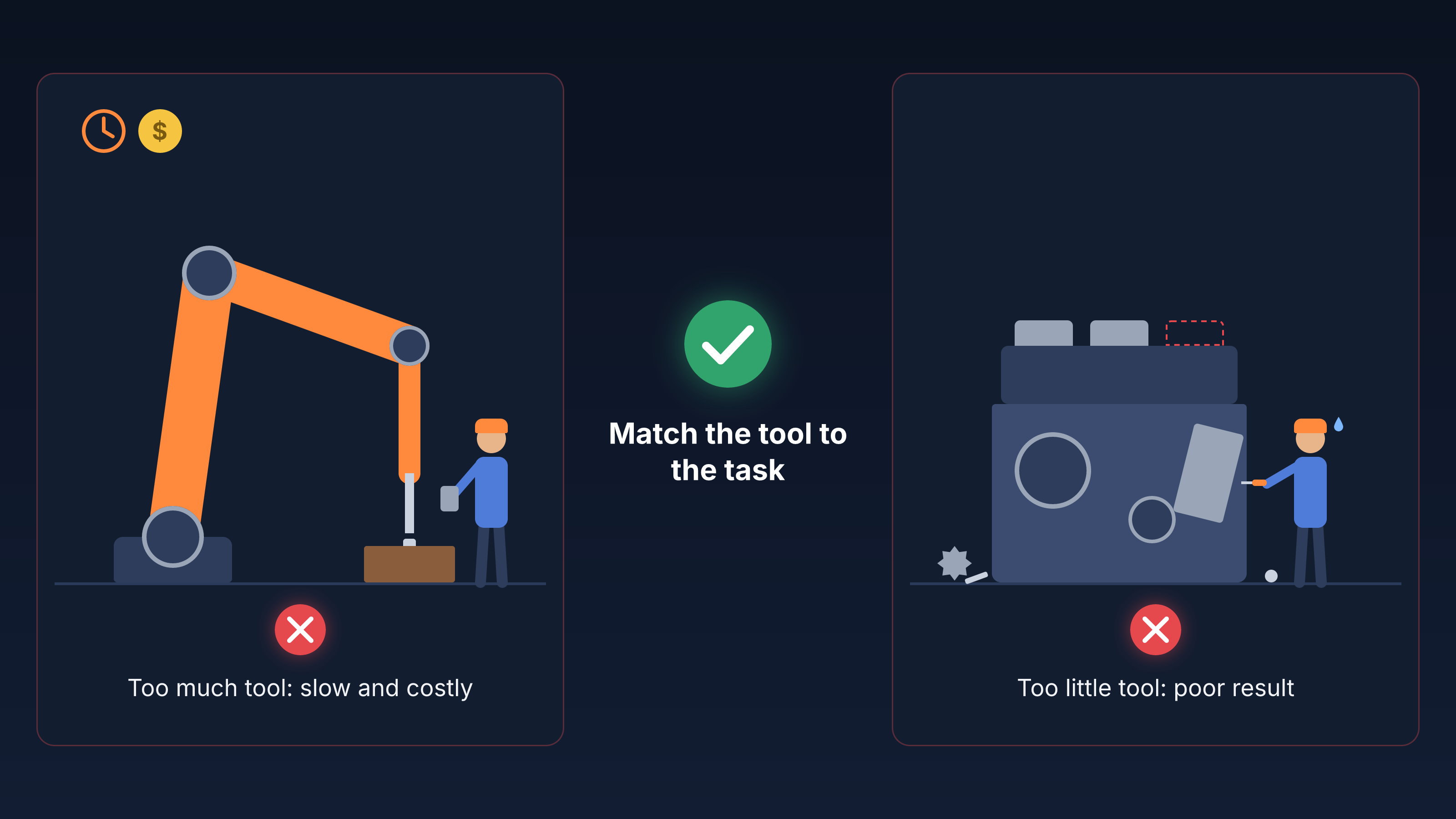
Many developers pick one model and use it for every task. This causes two problems.
- You use a big model for a small task. The answer is slow and costs more than it needs to.
- You use a small model for a hard task. The answer is weak and you must repeat the work.
The fix is simple. Know what each model does best.
The Workshop Analogy
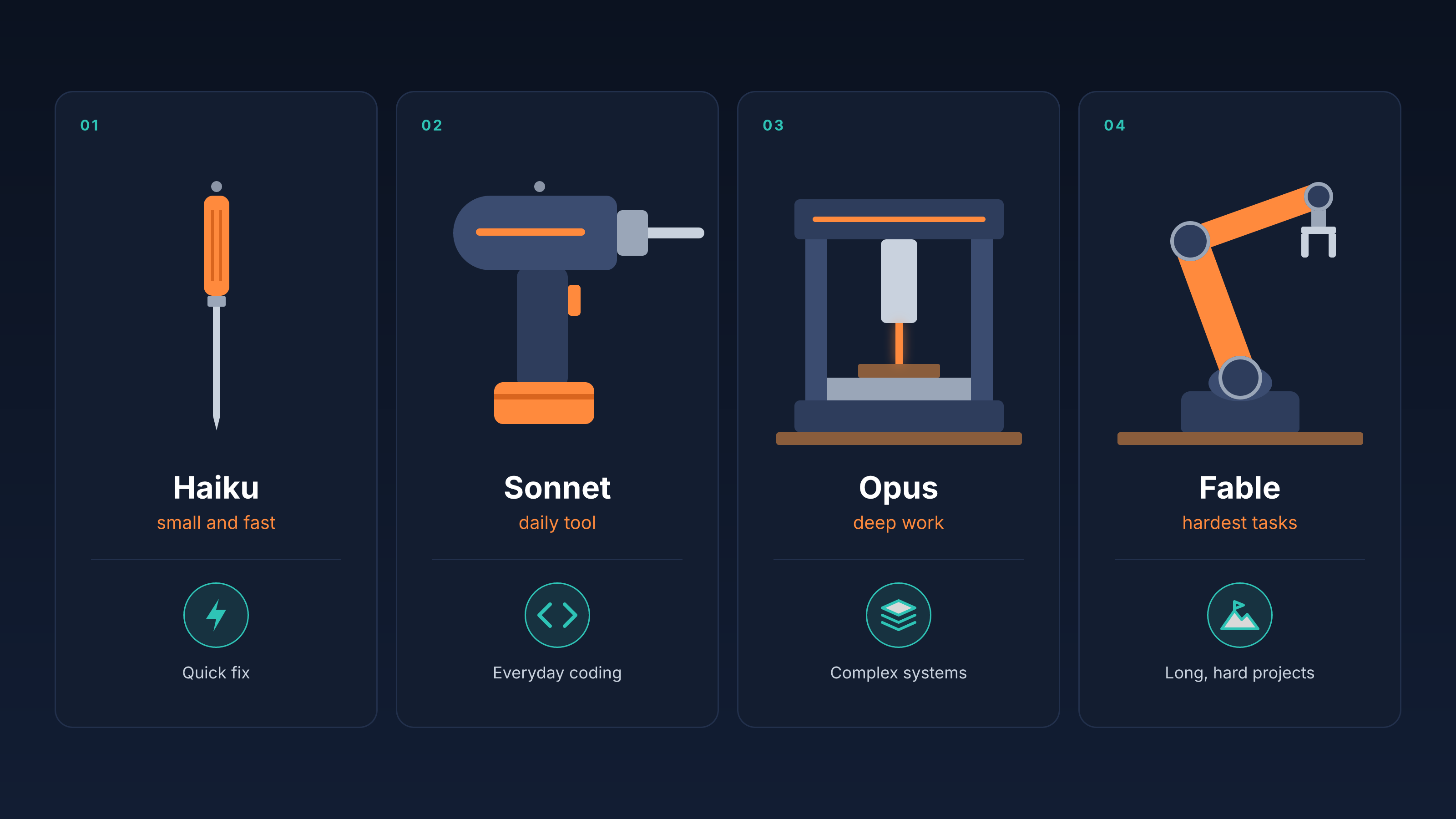
| Model | Tool in the workshop | Best use |
|---|---|---|
| Haiku | Screwdriver | Small, fast, repeated tasks |
| Sonnet | Power drill | Daily work: code, writing, analysis |
| Opus | CNC machine | Deep reasoning and complex work |
| Fable | Industrial robot arm | The hardest tasks, with extra safety measures |
Haiku: the screwdriver
Haiku is small and fast. It is good for simple jobs that you repeat many times.
Examples: sort messages, extract fields from text, write short labels.
You do not need a big machine to turn a small screw.
Sonnet: the power drill
Sonnet is the tool I reach for most days. It is a balanced model. It is fast enough for daily work and strong enough for real tasks.
Examples: write a NestJS service, review a pull request, explain an error log, draft a blog post.
Most jobs in a workshop need a drill. Most of my work needs Sonnet.
Opus: the CNC machine
Opus is for deep work. A CNC machine is slow to set up, but it makes precise parts that a hand tool cannot make.
Use Opus when the task has many parts that depend on each other.
Examples: design a system architecture, find a hard bug across many files, plan a large migration.
Fable: the industrial robot arm
Fable is in the Mythos tier. It sits above Opus. Anthropic added extra safety measures for biology and cybersecurity topics.
An industrial robot arm can do work that no other tool in the room can do. But it is large, and it is wrong for small jobs.
Use Fable only when the task is very hard and the other models are not enough.
Right Tool, Right Place
Here is a simple rule that I follow:
- Start with Sonnet.
- If the task is simple and you repeat it often, move to Haiku.
- If Sonnet gives a weak answer on a hard task, move to Opus.
- If Opus is not enough, try Fable.
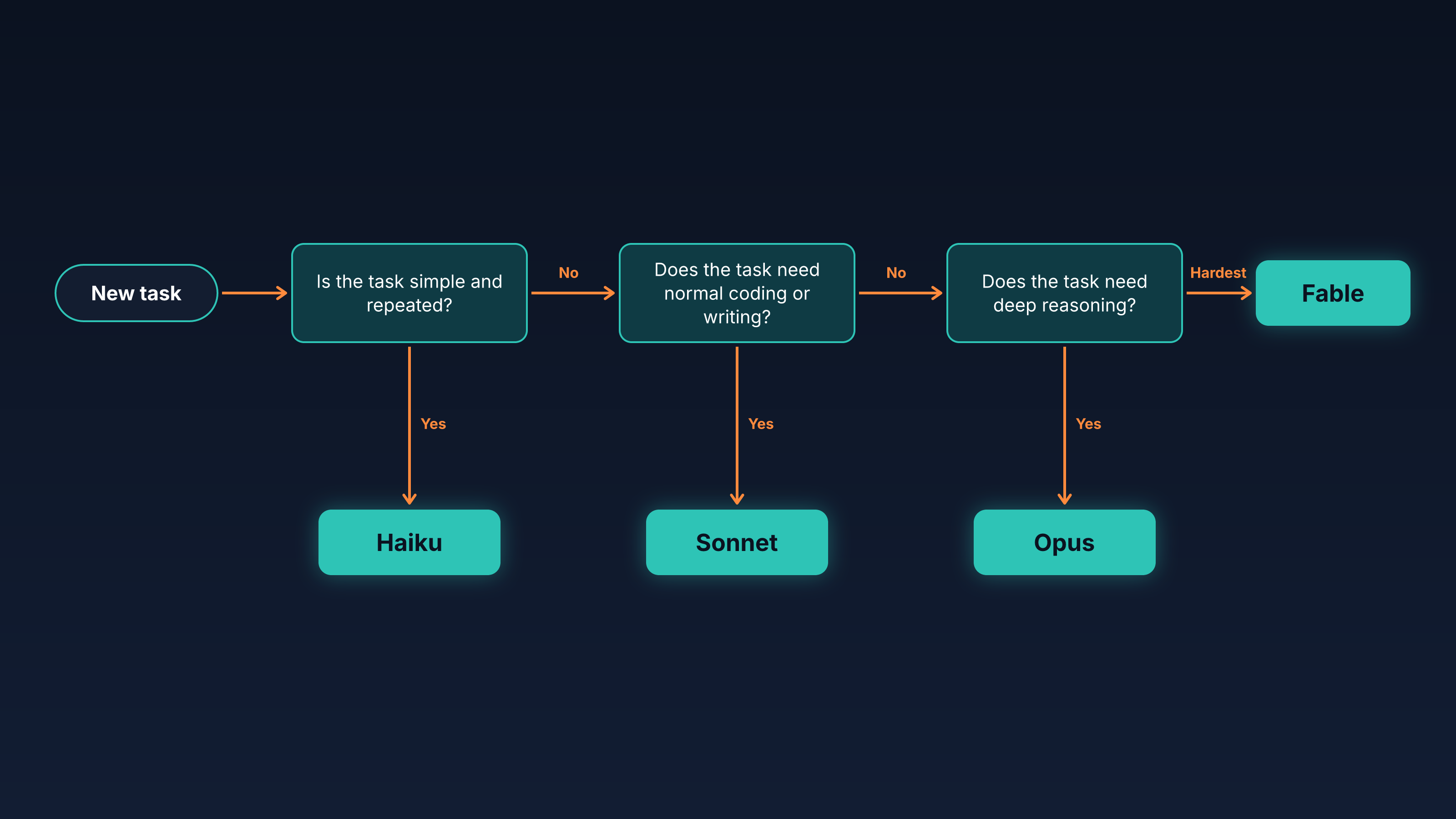
Move up only when you have a reason. Move down when the task is simple.
What I Do as a Software Engineer
In my daily work I use more than one model.
- I use Sonnet for most coding tasks and for AI-assisted workflows.
- I use Opus when I plan a big change across many services.
- I use a smaller model for simple, repeated tasks.
This saves time. It also saves cost.
Conclusion
No model is the best for every task. A good engineer, like a good worker, picks the right tool for the job.
Next time you start a task, ask one question first: "What size is this job?" Then pick your tool.
Model names and tiers change over time. Check the official Anthropic documentation for the latest list.